
Why Freeze Protection Matters for Georgia Landscapes
Winters in Georgia may be milder than in many other regions, but sudden cold snaps can still create challenges for even the healthiest landscapes. Overnight freezes, combined with damp soil and quick temperature swings, can damage plants and stress your outdoor spaces more than many homeowners realize. A single freeze can wilt foliage, weaken root systems, or cause cracks in hardscapes if the yard is not properly prepared.
At Wallis Landscape, we understand how much time, effort, and care homeowners invest in their outdoor spaces. Protecting that investment begins with preparation. A thoughtful approach to winter care helps plants stay strong, preserves your hardscape, and ensures your landscape continues looking beautiful well into the next season.
How Georgia’s Winter Weather Impacts Your Yard
Georgia’s winter weather can change quickly. A warm, sunny afternoon followed by a sudden overnight freeze can confuse plants and expose vulnerable areas of your yard. Tender new growth may emerge during warm spells, only to be damaged when temperatures drop. Root zones can also be affected if soil temperatures fall too rapidly. Preparing for these fluctuations gives your landscape a better chance to remain resilient throughout the coldest months.
Identifying Areas Most Vulnerable to Freezing Temperatures
Some parts of your landscape are naturally more susceptible to cold weather than others. Young plants, tender ornamentals, tropical species, and recently installed shrubs are often the first to show distress during freezes. These plants may lose leaves, brown at the edges, or experience root shock if not protected ahead of time.
Hardscapes also face risks. Patios, walkways, retaining walls, and water features may develop cracks if water settles into small spaces and freezes. The freeze and thaw cycle can slowly break down stone, concrete, or mortar over time. Spotting these vulnerabilities early allows you to take simple steps that help prevent long-term damage.
Preparing Plants for Winter Freezes
Mulching and Soil Protection
Mulch acts as a natural blanket for your plants. A proper layer of mulch helps regulate soil temperature, keeps roots insulated, and reduces the impact of sudden freezes. It also helps retain moisture, which supports healthier root systems during cold periods. Applying mulch around shrubs, perennials, and young trees is one of the most effective ways to prepare your landscape for winter.
Watering Ahead of Cold Weather
Moist soil absorbs and holds heat more effectively than dry soil. Giving your plants a light watering before a freeze helps warm the surrounding soil and provides a buffer against cold air. While this does not prevent freezing entirely, it helps reduce stress on root systems and improves plant resilience during sudden temperature drops.
Covering Delicate or Sensitive Plants
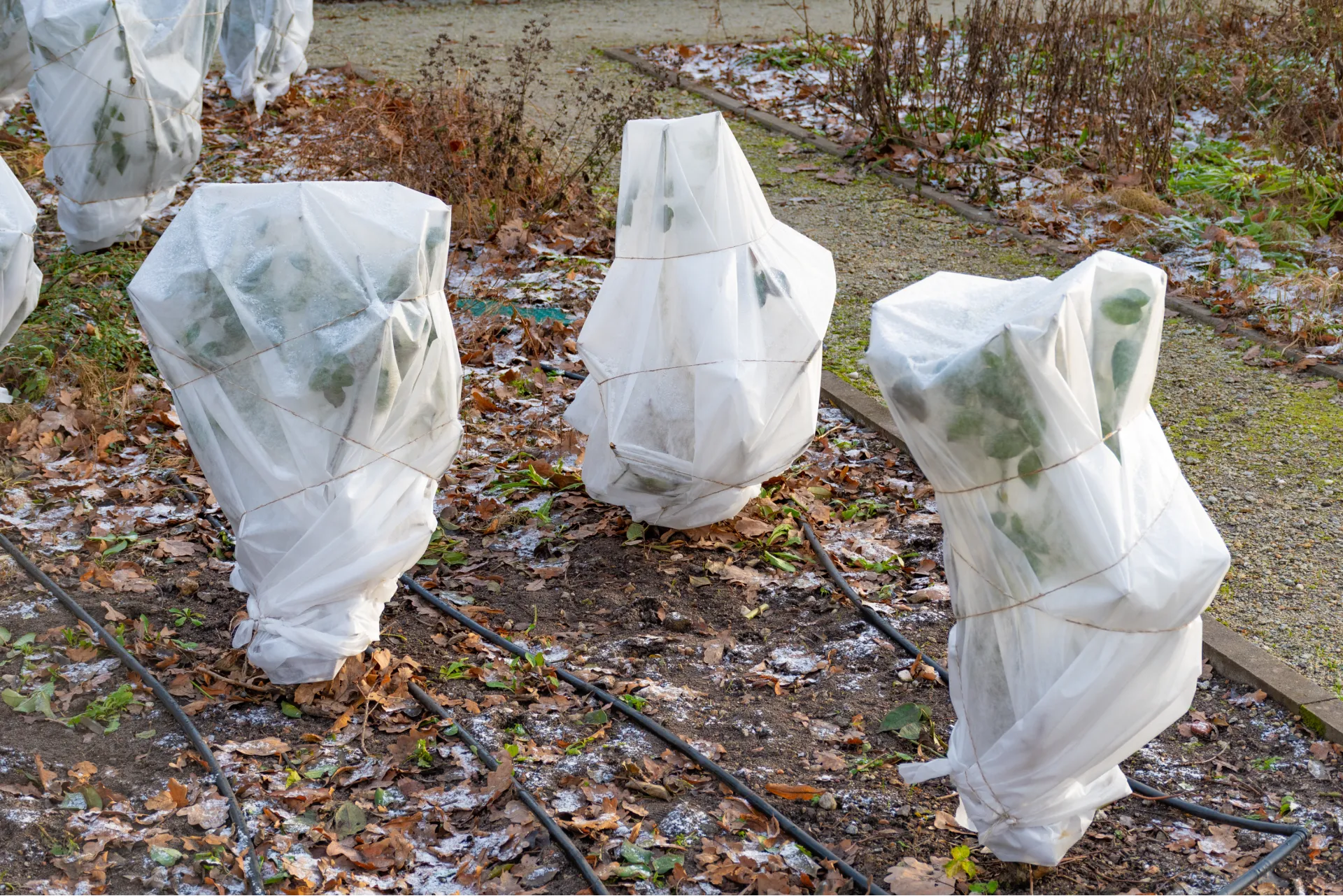
Some plants need hands-on protection when temperatures fall below freezing. Using breathable covers, frost cloths, or even household materials like old sheets can help trap natural ground heat and shield foliage from icy winds. Covers should drape loosely and extend to the ground, creating a pocket of warmer air, and be removed during the day to prevent overheating and ensure proper airflow.
Caring for Trees and Shrubs During Freezing Weather
Trees and shrubs can handle winter conditions better than smaller plants, but they still benefit from proper care. Pruning at the correct time helps prevent damage, but pruning too soon can remove protective growth or stimulate new shoots that may freeze. It is often best to wait until the coldest part of winter has passed unless trimming is needed for safety or structural concerns.
Young or newly planted trees may need extra attention. Wrapping trunks helps minimize stress from rapid temperature changes and prevents sunscald, which occurs when bark warms in the sun and then rapidly cools at night. Mulching around the base also helps insulate roots and keep soil temperatures more consistent.
Protecting Hardscapes From Freeze Damage
Preventing Cracks and Surface Wear
Hardscape surfaces may appear sturdy, but freeze and thaw cycles can cause gradual wear. Clearing dirt, leaves, and standing water from patios, walkways, and driveways reduces moisture exposure. Even thin layers of water can freeze, expand, and create pressure that leads to cracking over time.
Retaining walls and garden borders also benefit from winter attention. Ensuring proper drainage behind these structures helps prevent water buildup, which can expand when frozen and weaken the wall’s stability. A seasonal inspection of hardscapes allows you to identify small issues and address them before they become major repairs.
Irrigation System Precautions
Irrigation systems are especially vulnerable to freezing temperatures because water left in pipes or valves can freeze and expand. Exposed components such as above-ground lines, backflow preventers, or valves should be insulated or protected to reduce the risk of cracking.
Some homeowners choose to reduce irrigation schedules or turn off certain zones during the winter months. Draining exposed pipes and allowing the system to rest during cold periods helps prevent unexpected damage and ensures your system is ready for spring.
Incorporating Landscape Lighting Safely in Winter
Improving Safety During Shorter Days
With shorter daylight hours, lighting becomes more than an aesthetic choice. Pathways, steps, driveways, and entrances often need extra illumination during the winter months. Well-placed lights make outdoor spaces safer and reduce the risk of slipping on damp surfaces or unseen steps.
Ensuring Fixtures Are Ready for Cold Weather
LED lighting is particularly effective during the winter because it remains bright and reliable even in colder temperatures. Checking seals, ensuring proper wiring, and clearing debris around fixtures help your lighting system perform well through the season. A well-lit landscape also adds warmth and beauty to your home during the darker months.
Long-Term Strategies to Improve Freeze Resilience
Choosing Plants and Materials That Handle Winter Well
Selecting plants that naturally tolerate cold weather is one of the best long-term strategies for reducing winter damage. Many evergreen shrubs, native plants, and hardy perennials thrive in Georgia’s climate and bounce back easily after freezes.
Healthy soil also plays a major role in winter resilience. Soil enriched with organic matter, proper drainage, and consistent mulch coverage supports stronger root systems that withstand cold weather more effectively.
Durable hardscape materials, such as quality stone or properly installed pavers, hold up well through changing temperatures and help reduce maintenance needs throughout winter. Wallis Landscape guides homeowners in selecting materials that match both style and climate needs.
How Wallis Landscape Helps Homeowners Prepare for Winter Freezes
Wallis Landscape has years of experience helping homeowners prepare their yards for winter. Our team understands how Georgia’s climate affects plants, soil, and hardscape structures. We offer mulching services, plant protection strategies, irrigation assessments, and hardscape evaluations to help your landscape stay healthy and protected. Our goal is to make winter preparation simple, effective, and tailored to the unique needs of your property.
Keep Your Landscape Protected This Winter
With the right preparation, your landscape can remain healthy and attractive throughout the winter season. Taking time now to protect your plants, hardscapes, and irrigation system ensures a stronger start to spring and minimizes the risk of unexpected damage.
If you would like support preparing your yard for winter freezes, Wallis Landscape is here to help. Contact us through our website or call/text 770-985-2099 to schedule a consultation and learn how we can help protect your outdoor spaces this winter.


